What Are Foolproof Ways for People to Hype Brands?
A More Considered View on Building Momentum
I’m not entirely convinced that anything in branding is foolproof.
And I remain slightly uneasy with the word hype.
Hype implies rapid inflation. Sudden awareness. A spike of attention that may or may not last. Sometimes it carries the faint scent of exaggeration.
I prefer the idea of building brands - carefully, deliberately, cumulatively - so that momentum is earned rather than manufactured.
But let’s accept the spirit of the question.
What reliably creates energy around a brand?
What consistently builds attention, talkability, and demand?
1. Clarity Before Visibility
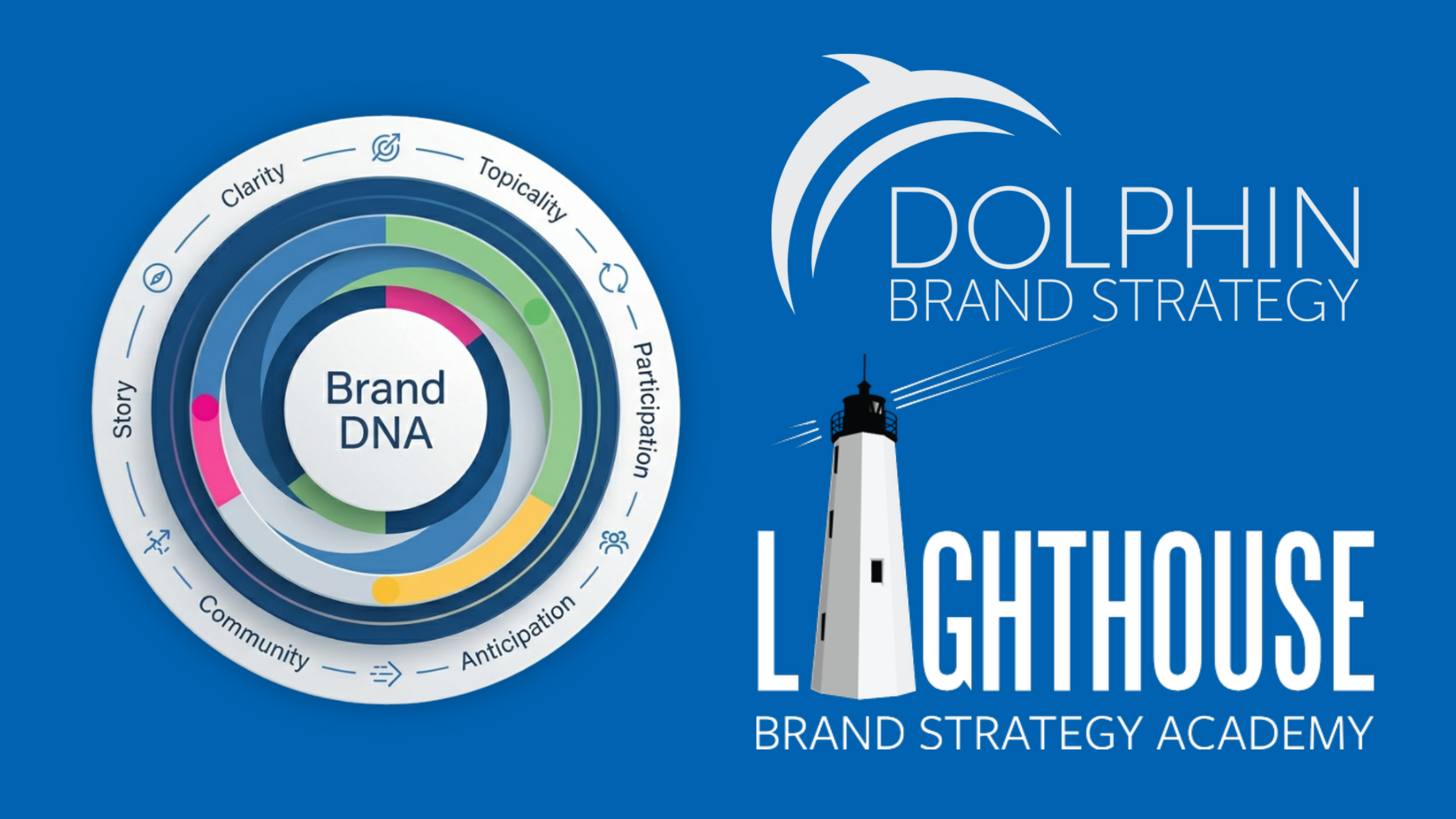
Define a clear Brand DNA - your Role, Promise, the benefit you exist for to deliver, and your Culture - how you go about doing it.
2. Topicality
Recognise, plan and respond to significant moments that naturally reinforce what you stand for.
3. Participation
Design the brand so people can contribute, co‑create, and express themselves through it. Engagement with a brand raises the quality of impact.
4. Anticipation
Build interest by staging reveals, launches, and communications so desire builds before availability.
5. Exclusivity
Make belonging feel valued by being selective, earned and – when appropriate – intentionally exclusive.
6. Controlled Scarcity
Manage supply and exposure so value is protected rather than diluted. NB. No bluffing – that only backfires.
7. Human Community
Create physical or digital spaces where shared human values and rituals can form.
8. Strategic Alignment
Partner with influencers, collaborators, or platforms that feel natural rather than opportunistic or ‘paid for’.
9. Word‑of‑Mouth Triggers
Design moments within the experience that are inherently worth repeating.
10. Bold Acts
Occasionally dramatize your promise through actions bold enough to get noticed and to spread.
11. Story‑Driven Positioning
Give the brand a narrative people can retell in their own words.
Clarity Before Visibility
If the question is: “What are the foolproof ways to hype brands?”
My answer may sound counter-intuitive.
Before you think about hype, define your Brand DNA.
Over 25 years ago, we coined the term Brand DNA to shift strategy away from the ‘superficial packaging’ of brands - logos, visual identities and advertising campaigns - toward the substance of what a brand actually stands for: the experience it delivers that drives perception.
Because visibility without clarity is simply noise.
A Brand DNA goes to the heart of a stakeholder’s relationship with the brand. It defines:
WHY you exist (your Role)
WHAT you promise
WHAT benefit that promise delivers
HOW you go about delivering it (your Culture and Spirit)
And the Icons & Attributes that make it distinctive and memorable
It is a future forward desired positioning - a quest. A holy grail to strive for.
Most organisations attempt to generate attention before they have articulated this core. They chase trends. They inflate claims. They seek amplification without alignment.
But without a clearly defined DNA, any attempt at hype is disconnected. It may create a spike in awareness, but it does not build cumulative momentum.
With a defined Brand DNA, something very different happens.
You gain not only a beacon or North Star, but also a filter.
When an opportunity presents itself, the question is no longer:
“Will this get us noticed?”
It becomes:
Is this aligned with our Role?
Does it reinforce our Promise?
Is it Relevant, Compelling, Differentiating - and above all, Credible?
That final test is critical.
So many brands over-promise in pursuit of attention. But hype built on an undelivered promise erodes trust quickly.
Momentum built on credible Brand DNA compounds.
And that consistency - delivering your promise in everything the brand says and everything the brand does - is the closest thing you will find to “foolproof.”
Topicality
Once a brand truly understands what it stands for, it can act with confidence.
But if there is an under utilised and almost foolproof way of generating energy around a brand, it is topicality.
Topicality is the ability to recognise when an external moment - cultural, sporting, commercial or social - aligns naturally with your Role and Promise, and to respond in a way that feels both timely and authentic.
Without clarity, brands chase everything.
With clarity, they choose selectively.
One of the most memorable examples for me remains Fosters lager’s “secret keel revealed.”
In 1983, Australia ended the United States’ 132-year winning streak in the America’s Cup using a radically designed winged keel, kept hidden beneath tarpaulins whenever the yacht was out of the water.
For many Australians, sailing and beer - and beating the Americans - must have felt close to heaven on earth.
Fosters responded with a simple sketch ad: the “secret keel revealed” - a can of Fosters lager.
Brilliant in its simplicity.
Topical. Immediate. Perfectly aligned.
How many small print ads from forty years ago can you remember?
Patagonia offered a different but equally powerful example. On Black Friday, it ran its now famous “Don’t Buy This Jacket” message, encouraging repair and reuse instead of impulsive consumption.
The moment amplified the philosophy.
And when a power outage halted the 2013 Super Bowl for 34 minutes, Oreo posted an image of a biscuit dunked in the dark with the line:
“You can still dunk in the dark.”
Quick, yes. Very.
But more importantly, on brand.
In each case, the opportunity was fleeting.
The reason the response worked was not simply speed, it was fit.
Your Brand DNA provides the internal compass that allows you to move quickly without losing direction. It turns reaction into reinforcement.
That is why topicality, anchored in clarity, can be the closest thing to foolproof hype.
Participation: Turning Customers into Contributors
Participation is about involvement, not exposure.
Instead of broadcasting at people, you design ways for them to engage with the brand directly. When customers contribute - through content, feedback, customisation, events, or community - their relationship with the brand changes.
They are no longer just buyers. They are participants.
User generated content is one example, but the principle runs deeper. People engage when the brand gives them something useful to express - a point of view, an aesthetic, a set of values. Participation works when it reinforces identity.
Community builds on this. A strong brand community is not simply a follower count. It is a shared space where people exchange ideas, experiences, or status linked to the brand.
Participation delivers three commercial advantages:
It increases engagement without proportional media spend.
It generates organic advocacy.
It strengthens retention through emotional investment.
But it requires restraint. You cannot fully control how people interpret or represent the brand once you invite them in.
Done well, participation turns attention into involvement - and involvement into momentum.
Because when customers become contributors, hype ceases to be a campaign objective. It becomes a by-product of shared ownership.
And shared ownership, more than any paid media strategy, is what turns attention into momentum.
Lay’s “Do Us A Flavor” campaign turned product development into public participation. Customers were invited to submit new flavour ideas, vote on finalists, and see the winning flavour produced and distributed nationally. Instead of announcing a new launch, the brand involved consumers in choosing it. That involvement generated conversation, repeat visits, and media attention. Participation didn’t just promote the product — it became the product story.
The example I always use is Betty Crocker cake mixes that dates all the way back to the 1950’s. They discovered that housewives felt guilty when cake-making was too easy. Even though they could make great mixes that just required water, they found that adding a fresh egg to the mix gave ‘ownership’ of the cake to the baker. And pride in having made it.
I often ask the question ‘What’s the egg in the mix?’ to my clients, meaning – what’s the small effort we’re asking our customers to make to take ownership of the product or experience?
Anticipation: Creating Demand Before Launch
Anticipation is about managing timing.
Instead of making something immediately available, you stage its release. You control information. You reveal selectively. You give the market time to notice.
The effect is practical: awareness builds before supply appears.
Teasers, waitlists, early access lists, countdowns, preview events - these are not theatrics. They are demand shaping tools. They allow interest to accumulate rather than forcing immediate conversion.
Anticipation works because it signals intent. It suggests the launch matters. It gives media, influencers, and customers something to track.
But it only works if the product justifies the buildup. Overinflated prelaunch noise followed by an ordinary reveal damages credibility.
Handled properly, anticipation does two things:
It concentrates attention at the moment of release.
It increases perceived value before the first unit is sold.
That is not hype. It is controlled momentum.
In the pre-Woke days my old boss David Ogilvy gave an excellent example of anticipation in a campaign to promote the effectiveness of poster advertising. A poster advertising company in Paris ran a week-long poster campaign with an attractive young woman in a bikini promising “On 2 September I’ll take off the top”...which she duly did with the promise “On the 4 September I’ll take off the bottom”...which again she did (this time facing away from the camera in a small nod to modesty). It proved two things at once - first that posters could be high impact and rapidly generate and build awareness – and second, that it always pays to keep your promise.
I make no apology for using this example, because it remains highly relevant: sex appeal is still one of the most powerful human drivers, regardless of gender or orientation.
A prelaunch email waitlist is one of the simplest forms of anticipation. Instead of releasing immediately, a founder creates a landing page with a clear launch date and collects signups in advance. Behind the scenes updates, early previews, and progress milestones are shared with subscribers before the product is available. By the time launch day arrives, interest is concentrated rather than scattered. The audience is warmed — and ready to act.
Exclusivity: Making Access Feel Special
Exclusivity is about selective access.
Not everyone gets in. Not everyone gets it.
When a brand limits access - through membership, invitation, tiered benefits, or private releases – it often increases perceived value. What is harder to obtain is judged to be more desirable.
Exclusivity works because it signals status. It creates distinction between insiders and outsiders. That distinction can be based on loyalty, spend, influence, or simple timing.
Private previews. Members only drops. Invitation only events. Early access tiers. Each mechanism reinforces the idea that access is intentional, not automatic.
Importantly, exclusivity is different from scarcity.
Scarcity limits supply.
Exclusivity limits eligibility.
Used well, exclusivity strengthens loyalty and encourages progression. Customers work to gain access and stay to retain it.
Exclusivity (as with scarcity below) comes with a ‘handle with care’ warning sign. Managed poorly, it feels elitist or artificial.
Handled with discipline, exclusivity increases perceived value without increasing cost. It turns access itself into an asset.
One of my favourite brands and examples of strategic exclusivity is Costco. By charging an annual membership fee, Costco deliberately places a small but meaningful barrier at the door. That fee does two things at once: it funds the model and filters the mindset of the customer. As co-founder Jim Sinegal famously implied, the membership is a way to actively select a better class of customer and weed out the worst ‘freebie hunters’. It attracts customers who are willing to commit, behave, and buy with intent. The result is a self-selecting community of high-trust, high-value shoppers, which allows Costco to operate on razor-thin margins, limited SKUs, and a no-frills experience. In brand terms, the fee isn’t just a revenue stream - it’s a signal. It says: this is how we do things here. And those who opt in, belong.
Amazon Prime is a mainstream example of structured exclusivity. Products on Amazon are widely available, but certain benefits — faster shipping, exclusive deals, Prime Day access, and streaming content — are restricted to subscribers. The barrier to entry is not wealth, but membership. By gating convenience and savings behind a subscription, Amazon turns access into a privilege. The exclusivity is functional rather than aspirational, yet it drives retention, frequency, and perceived value.
Controlled Scarcity: Managing Supply to Protect Value
Scarcity is about supply, not status.
Where exclusivity limits who can access something, scarcity limits how much is available.
By deliberately restricting quantity, distribution, or timing, a brand increases urgency and protects perceived value. Limited editions, capped production runs, seasonal releases, and one-time collaborations are all scarcity mechanisms.
Scarcity works because availability influences perception. When supply is constrained, customers infer demand. That inference elevates desirability.
It also changes behaviour. Decisions are made faster. Consideration periods shorten. Hesitation decreases.
But scarcity must be credible. Artificial shortages, endless “limited” editions, or constant countdown resets quickly undermine trust. If everything is scarce, nothing is.
Used strategically, scarcity does two things:
It concentrates demand into defined windows.
It prevents oversupply from eroding brand equity.
Scarcity is not about selling less. It is about selling with discipline.
Handled properly, it turns finite supply into sustained momentum.
I remember a great campaign from Ford USA around the time of the bicentenary when national pride was running high. They solved a problem of an over-supply of old model cars that were left unsold by painting them either red, white, or blue and positioning them as a limited-edition series playing on the ‘Red, White and Blue’ of the American flag. A simple but brilliant idea. And a powerful demonstration of scarcity creating demand and perceived value.
Disney’s historical “vault” strategy is a clear example of controlled scarcity. Classic animated films were released for a limited sales window and then withdrawn from the market for years. By restricting availability over time, Disney prevented oversaturation and renewed demand with each re-release. The constraint was artificial but disciplined — consumers knew access would close. That predictability concentrated purchases into defined periods and preserved the long term value of the catalogue.
Community: Building Belonging Around the Brand
Community is about connection between customers, not just connection to the brand.
A following is an audience.
A community interacts.
When people gather around a brand shared behaviours and norms begin to form. Conversations happen without prompting. Members recognise each other. The brand becomes a reference point for belonging.
This creates a different kind of momentum. Growth is no longer driven solely by media spend. It is reinforced by peer interaction.
Communities can be built through events, forums, membership platforms, ambassador programmes, or recurring rituals. The mechanism matters less than the outcome: sustained interaction between participants.
Commercially, community delivers three advantages:
It increases retention through social ties.
It reduces reliance on paid acquisition.
It creates builtin advocacy.
But community cannot be forced. It must be facilitated and moderated, not controlled.
When done well, the brand stops being just a product or service.
It becomes a shared space — and shared spaces are harder to abandon.
LEGO has built one of the strongest brand communities by turning customers into creators. Through platforms like LEGO Ideas, fans submit their own set designs, vote on concepts, and see selected creations turned into official products. The brand also supports large adult fan communities, events, and collaborative builds. Interaction happens between members — sharing techniques, showcasing models, debating releases — not just between brand and buyer. That participation creates long‑term engagement. Customers don’t simply purchase sets; they contribute to the ecosystem.
In my own online community The Lighthouse we have built a small but mutually supportive community of business owners, solopreneurs and aspiring strategists bonded by a shared interest in building a stronger brand that drives their business.
It take a lot of investment in setting up and maintaining forums, regular LIVE cohort meetings, valued guest speakers and an exclusive CBO Masterclass program – but the community itself begins to define the culture and set direction following the vision to democratise effective world-class brand strategy.
Strategic Alignment: Borrowing and Transferring Equity
Strategic alignment is about association.
When a brand partners with another brand, individual, platform, or event, it borrows credibility and transfers meaning. The right alignment can accelerate positioning faster than standalone communication.
But alignment only works when it feels right.
The partnership should reinforce your Brand DNA, not distract from it. Shared values, shared audiences, or complementary strengths must be clear. Otherwise, the collaboration can feel forced or not genuine.
Co-branded products, influencer partnerships, sponsorships, and cultural collaborations are all alignment mechanisms. Each has the potential to expand reach — but reach alone is not the objective.
The real value lies in equity transfer.
Credibility moves across audiences.
Relevance extends into adjacent spaces.
Perception shifts through association.
Poor alignment creates confusion. Strong alignment creates amplification.
Handled strategically, partnerships do more than add visibility. They strengthen positioning while expanding demand.
Although it was technically a client-agency relationship, the Ogilvy-IBM partnership was really an intellectual and philosophical alignment that worked for both brands. ‘I think therefore IBM’ is still one of the best taglines ever generated IMHO. It reflected a shared world view on the power of intelligent systems thinking.
The partnership between GoPro and Red Bull is a clear case of strategic alignment. Both brands operate in the same cultural territory: extreme performance, risk, and adrenaline. Red Bull creates the spectacle - cliff dives, mountain bike descents, stratospheric jumps. GoPro captures it from the athlete’s perspective. The collaboration feels inevitable because the values overlap completely. Red Bull gains immersive content that heightens intensity. GoPro gains association with world class stunts that showcase its product capability in the most demanding environments. Neither brand stretches beyond its identity — they amplify what already exists.
Word of Mouth Triggers: Designing for Shareability
Word of mouth rarely happens by accident.
People talk when something is useful, surprising, status enhancing, or emotionally charged. If none of those elements are present, experiences tend to remain private.
Word of mouth triggers are deliberate design choices that make sharing more likely.
It could be a distinctive product feature.
An unexpected service moment that goes beyond the call of duty.
A controversial point of view.
A data insight worth repeating.
Or a visible signal of status.
The principle is simple: give customers something easy to retell.
Importantly, this is different from asking for referrals or incentivising reviews. Those are mechanics. A trigger is built into the experience itself.
Commercially, effective word of mouth:
Reduces acquisition costs.
Increases trust through peer validation.
Extends reach beyond paid channels.
But the trigger must align with the brand. Shock value without relevance may generate noise, but it rarely builds durable equity.
Handled with intent, word of mouth turns customers into distributors and conversations into demand.
As a small business-owner myself I am critically aware of the power of word-of-mouth. It’s still by far the most effective source of new business for me – by far. For all the millions spent on digital lead generation, complex funnel management and automations – asking your previous clients to pass on a good word to a potential prospect is still likely to be the most effective new business tool.
Airbnb’s “unusual stays” - treehouses, lighthouses, converted planes - are inherently storyworthy. Guests don’t need prompting to share them. The experience is novel, visual, and easy to explain: “We’re staying in a treehouse.” The product itself creates the conversation.
Bold Acts: Creating the Moment
Most brands respond to moments. Bold brands create them.
A bold act is a deliberate, high visibility move that dramatizes what the brand stands for. It is not a campaign variation or a tactical activation. It is a statement.
Red Bull’s Stratos jump.
Nike backing Colin Kaepernick.
Patagonia telling customers not to buy its jacket.
Each act was risky. Each polarised opinion. But each made the brand’s position unmistakable.
Bold acts work because they concentrate attention. They generate media coverage, social discussion, and public reaction simultaneously. Instead of borrowing relevance, the brand becomes the subject of conversation.
But boldness without alignment is noise. The act must clearly reflect your Brand DNA. If it feels opportunistic or inconsistent, it damages credibility rather than building it.
If you claim to stand for something, be mindful that eventually you must be willing to make a stand. (You may or may not have liked it at the time, but George W. Bush’s: ‘You’re either with us or you’re with the terrorists!’ post 9/11 is truthfully and powerfully polarising).
Used sparingly, bold acts can:
Reset perception.
Accelerate positioning.
Demonstrate conviction.
They are not everyday tools. They are strategic interventions.
Handled with discipline, a bold act does more than attract attention.
It defines what the brand is willing to what I say, ‘die in a ditch for’.
The goal isn’t to divide the world.
It’s to make your position so clear that the right people recognise themselves in it.
Story Driven Positioning: Giving People a Narrative to Retell
Positioning defines what you are.
Story makes it memorable.
Facts explain features. Stories organise meaning. When a brand is anchored in a clear narrative -its origin, its mission, its belief, its enemy - people can repeat it in their own words.
That repeatability matters.
A strong brand story simplifies communication across channels. It aligns teams internally. It gives customers language to describe why the brand exists.
Consider brands built around a founder’s frustration, a cultural tension, or a clear challenger stance. The story becomes shorthand. It travels faster than product specifications.
Story-driven positioning does three things:
It increases recall.
It strengthens differentiation.
It makes advocacy easier.
But the story must be true and consistent. Manufactured myths rarely survive scrutiny.
Handled well, story turns positioning from a statement into a narrative.
And narratives move further than claims.
In my old world of advertising, we were tasked to tell a story in 30 seconds, a minute at most. It boiled down the art of storytelling to the bare essence – creating a distinctive, relevant message that carried emotion and built affinity is quite a challenge.
Nowadays, the major oil companies can’t catch a break. We’re still critically dependent on fossil fuels for energy whether we care to admit it or not – and although I’m an advocate for clean energy and sustainability (I spent a decade as a co-founder of an alternative energy company) – I appreciate the value they still bring in bridging the transition. I still recall one of the best story commercials of all time for my old client, Shell. Called ‘Happy Valley’ it relayed the story of a pristine Welsh Valley whilst panning across bucolic scenes of meadows, streams, skipping lambs, foxes and so on.
I know it’s fashionable now it’s fashionable for some to scorn Apple for its behemoth corporate status – but I confess I’ve been an Apple fan since its conception. Their story is the story of founder Steve Jobs. A creative thinker and an outsider. A rebel. One of ‘the people who are crazy enough to think they can change the world’.
‘Think different’ has been their ethos, not just a rallying cry. Uncompromising technical capability and design aesthetic. When I had my first Mac...almost 40 years ago now...I was one of less than 4% of the computer-owning population that had one. They were almost exclusively found in creative industries. They were almost aggressively anti-establishment. Now their success has made them establishment – how quickly the world turns!
Gymshark’s story is central to its positioning. Founded by a teenager in a garage and grown through fitness influencers rather than traditional sports sponsorships, it frames itself as a brand built with the community, not above it. That origin reinforces its challenger identity - and gives customers a narrative that feels relatable and repeatable.
Conclusion
Hype – or raised awareness and affinity - is not a tactic. It is the outcome of disciplined brand building.
Participation, anticipation, exclusivity, scarcity, community, alignment, word of mouth, bold acts, and story - each is a lever. Used in isolation, they create spikes. Used strategically, they create momentum.
The objective is not noise. It is sustained demand.
Brands that understand this stop chasing attention and start engineering it.
And when attention is engineered with intent, hype is no longer unpredictable.
It becomes repeatable.